
Introduction
Lower back pain is extremely common. For many people it resolves within a few weeks, but for others it becomes persistent (chronic)—often defined as pain lasting longer than three months.
Chronic lower back pain can be frustrating and confusing. Symptoms may fluctuate, flare without a clear new injury, and persist even when scans appear “normal.” Many people are left unsure why their pain continues or what to do next.
This article explains the most common contributors to chronic lower back pain, why pain can persist, what warning signs should not be ignored, and how modern evidence-based care approaches management.
Important clinical disclaimer
This article is provided for general educational purposes only and does not constitute medical advice. Lower back pain can have many causes and should be assessed individually. If you experience severe or worsening symptoms, neurological changes, bladder or bowel disturbances, unexplained weight loss, fever, significant trauma, or constant night pain, seek urgent medical assessment.
Online health information should support understanding and encourage appropriate professional care rather than replace individualised assessment.
Understanding chronic lower back pain: causes vs contributors
In persistent back pain, there is often no single identifiable cause. Instead, pain is commonly influenced by multiple interacting contributors that develop over time.
In some cases, a specific medical diagnosis is present (such as fracture, infection, tumour, or significant nerve compression). However, for many people with chronic lower back pain, symptoms are best understood as the result of combined influences including physical capacity, movement habits, nervous system sensitivity, lifestyle factors, and psychosocial stressors.
This is why contemporary clinical guidelines increasingly recommend multimodal care, rather than focusing on one structure or single treatment approach.
Common contributors to chronic lower back pain
1. Reduced physical capacity and load tolerance.
The spine is designed to move and tolerate load. Chronic pain often develops when the demands placed on the back exceed its current capacity. Contributors may include:
- Reduced strength or endurance of trunk and hip muscles
- Prolonged sitting or static postures
- Sudden increases in physical activity or lifting demands
- Recurrent flare-ups followed by prolonged rest
- Protective stiffness or guarded movement patterns
Importantly, this does not mean the spine is “damaged.” It often reflects a mismatch between what the body is being asked to do and what it is currently conditioned to tolerate.
2. Age-related spinal changes
Imaging findings such as disc degeneration, disc bulges, or facet joint changes are commonly reported in people with back pain. However, research consistently shows that these findings are also very common in people without pain, and their prevalence increases naturally with age.
While imaging can be useful in specific clinical situations, scan findings alone often do not explain:
- pain severity,
- pain persistence, or
- functional limitation.
For this reason, imaging results must be interpreted alongside clinical assessment rather than viewed as a definitive explanation for symptoms.
3. Nervous system sensitivity and persistent pain
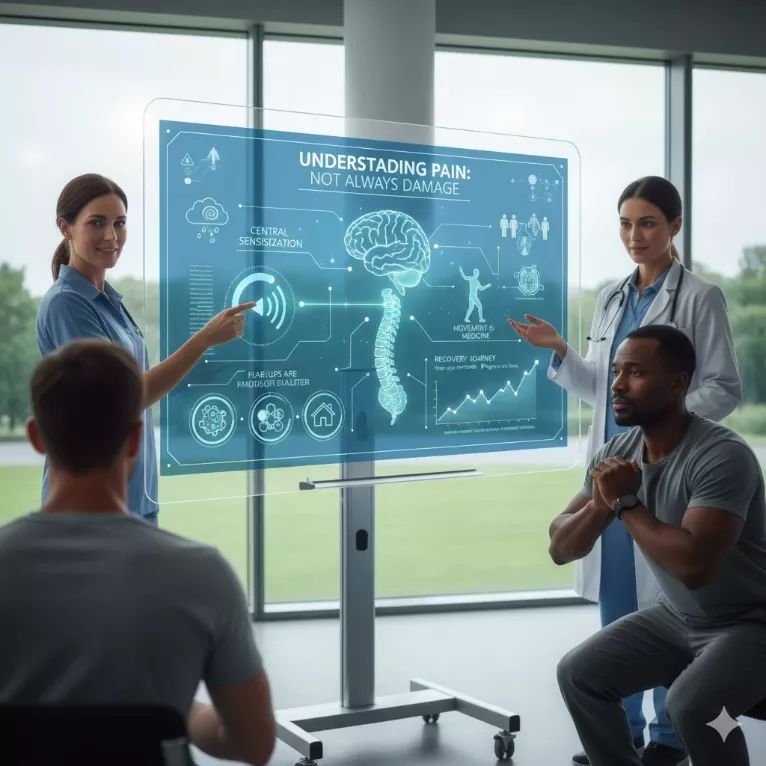
Pain is produced by the nervous system as a protective response. In chronic pain, the nervous system can become more sensitive and overprotective, meaning pain may be triggered more easily or persist longer than expected.
This heightened sensitivity can be influenced by:
- repeated episodes of pain
- reduced movement over time
- poor sleep and fatigue
- ongoing stress or emotional load
- previous injury experiences
This does not mean the pain is imagined or psychological. It reflects changes in how the nervous system processes threat and protection.
4. Fear of movement and avoidance behaviours
After experiencing back pain, many people understandably avoid movement to prevent further injury. While short-term caution can be appropriate, long-term avoidance may lead to:
- deconditioning and stiffness
- increased pain sensitivity
- reduced confidence in movement
- greater disability over time
Rehabilitation focuses on gradually rebuilding movement confidence through appropriate, graded exposure rather than forcing activity or avoiding it completely.
5. Lifestyle and health influences
General health factors can influence pain sensitivity and recovery capacity, including:
- sleep quality
- physical activity levels
- stress and workload
- smoking
- nutrition and metabolic health
These factors do not cause back pain on their own but can meaningfully affect how pain is experienced and how well someone responds to rehabilitation.
6. Less common but important specific conditions
Some causes of back pain require targeted investigation and management, including:
- nerve root irritation with progressive neurological symptoms
- spinal stenosis, particularly in older adults
- inflammatory back pain patterns
- fracture risk related to osteoporosis
- infection or malignancy (rare, but important to exclude)
A thorough assessment helps identify when further investigation or referral is required.
Red flags: when urgent medical assessment is needed
Seek urgent medical care if back pain is associated with:
- new or worsening leg weakness
- loss of bladder or bowel control
- numbness in the saddle region
- unexplained weight loss or fever
- history of cancer or immune suppression
- significant trauma
- constant, worsening night pain
These features do not automatically indicate serious pathology, but they require prompt medical evaluation.
What evidence-based care typically involves
For most people with chronic non-specific lower back pain, current clinical guidelines recommend starting with non-invasive, active management, which may include:
- structured exercise-based rehabilitation
- education about pain and recovery
- gradual return to normal activity
- addressing fear-avoidance and pacing
- multidisciplinary input when appropriate
Treatment plans should be individualised, monitored over time, and adjusted based on response rather than rigid timelines.
What a comprehensive assessment should consider
A thorough back pain assessment usually includes:
- symptom history and behaviour
- neurological screening where indicated
- movement and load tolerance
- functional goals (work, daily life, sport)
- lifestyle and recovery factors
- a clear plan with measurable outcomes
Imaging is used selectively, based on clinical findings rather than pain duration alone.
Final thoughts
Chronic lower back pain is rarely explained by one single structural issue. In many cases, pain reflects a combination of physical, neurological, and lifestyle factors that develop over time.
With appropriate assessment and a structured rehabilitation approach, many people experience meaningful improvement in function, confidence, and quality of life. The safest and most effective starting point is an individual assessment with a registered healthcare professional who can guide care based on current evidence and personal needs.