

A modern, evidence-based approach to musculoskeletal and chronic pain rehabilitation
Introduction
Musculoskeletal pain—particularly back, neck, and joint pain—is one of the leading causes of disability worldwide. Yet many people cycle through repeated treatments, scans, injections, or even surgery without lasting relief.
One reason for this is that pain is often treated as a purely physical problem, when in reality it is influenced by biological, psychological, and social factors. The Documentation-Based Care (DBC) method was developed in response to this challenge, providing a structured, evidence-based rehabilitation framework for people with persistent or complex pain conditions.
This article explains what the DBC method is, the science behind it, and why it has become an effective approach for managing musculoskeletal and chronic pain.
What Is the DBC Method?
Documentation-Based Care (DBC) is a structured rehabilitation model designed to manage musculoskeletal pain through:
- Objective measurement
- Individualised rehabilitation
- Ongoing outcome tracking
- A multidisciplinary, biopsychosocial approach
Rather than relying on short-term symptom relief, DBC focuses on functional improvement, patient engagement, and long-term outcomes.
A defining feature of DBC is its emphasis on measuring progress over time, using validated clinical outcome tools to guide treatment decisions.
Why Traditional Pain Treatment Often Falls Short
Traditional approaches to musculoskeletal pain often rely heavily on:
- Passive treatments (e.g. rest, modalities)
- Imaging findings (MRI or X-rays)
- Isolated interventions without reassessment
However, research has consistently shown that:
- Structural findings on scans often do not correlate with pain levels
- Pain can persist long after tissues have healed
- Psychosocial factors strongly influence recovery outcomes
Studies have demonstrated that disc degeneration, disc bulges, and other “abnormalities” are frequently present in people without pain, particularly as we age¹.
This has led to a shift away from purely structural explanations of pain toward more function- and outcome-based models of care.
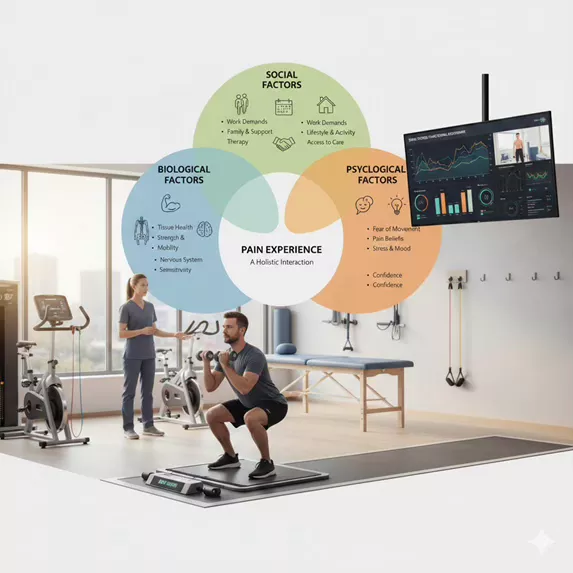
The Biopsychosocial Foundation of DBC
At its core, DBC is grounded in the biopsychosocial model of pain, which recognises that pain is influenced by:
1. Biological factors
- Tissue health
- Strength, mobility, and endurance
- Nervous system sensitivity
- Inflammation and general health
2. Psychological factors
- Fear of movement
- Pain beliefs and expectations
- Stress, anxiety, and mood
- Confidence in the body’s ability to recover
3. Social factors
- Work demands
- Family and social support
- Lifestyle and activity levels
- Access to appropriate care
This model is strongly supported by international pain science research and clinical guidelines²,³.
DBC programmes are designed to address all three domains, rather than focusing on physical symptoms alone.
Objective Measurement: The “Documentation” in DBC
A key scientific strength of the DBC method is its reliance on objective outcome measurement.
Rather than relying solely on how a patient “feels” on a given day, DBC uses validated tools to track:
- Pain intensity
- Functional capacity
- Disability levels
- Psychosocial risk factors
- Progress over time
Commonly used outcome measures in DBC-style programmes include:
- Pain and disability questionnaires
- Functional movement assessments
- Work and activity tolerance measures
This data-driven approach allows clinicians to:
- Adjust treatment appropriately
- Identify plateaus early
- Demonstrate measurable improvement
- Ensure accountability in care
Outcome-based rehabilitation has been shown to improve both clinical results and patient engagement⁴.
Why Exercise Is Central to the DBC Method
Exercise therapy is a cornerstone of DBC, but not in the sense of generic gym programmes.
Research consistently shows that:
- Exercise improves pain and function in chronic musculoskeletal conditions⁵
- Progressive loading improves tissue tolerance
- Movement reduces fear and nervous system sensitivity
- Active rehabilitation outperforms passive treatments in long-term outcomes
DBC programmes use individualised, graded exercise, designed to:
- Restore confidence in movement
- Improve functional capacity
- Reduce pain-related fear
- Support long-term self-management
Importantly, exercise in DBC is clinically supervised and progressed based on measurable outcomes, not arbitrary timelines.
Education and Pain Understanding
Another scientifically supported component of DBC is pain education.
Modern pain science shows that:
- Understanding pain reduces fear
- Reduced fear improves movement
- Improved movement supports recovery⁶
Education in a DBC programme helps patients understand:
- Why pain does not always equal damage
- Why flare-ups are normal during recovery
- How the nervous system influences pain
- Why gradual progression is safe and effective
Pain education has been shown to improve outcomes when combined with exercise-based rehabilitation⁷.
Multidisciplinary Care and the DBC Model
Musculoskeletal and chronic pain conditions are rarely solved by a single intervention.
DBC programmes often involve collaboration between:
- Physiotherapy
- Biokinetics / exercise therapy
- Medical oversight where appropriate
- Lifestyle guidance
- Psychosocial screening and support
This integrated approach aligns with international best-practice guidelines for managing persistent pain⁸.
Who Benefits Most From the DBC Method?
DBC-style rehabilitation is particularly effective for people who:
- Have chronic or recurrent pain
- Have not responded to short-term treatment
- Are considering surgery but want conservative options
- Have fear of movement or repeated flare-ups
- Want structured, measurable rehabilitation
It is not designed as a “quick fix”, but as a systematic pathway toward long-term improvement.
How the DBC Method Aligns With Modern Pain Science
In summary, the DBC method reflects current scientific understanding that:
- Pain is multifactorial
- Movement is medicine
- Outcomes should be measured
- Education is therapeutic
- Rehabilitation must be individualised
These principles are supported by decades of research in musculoskeletal and pain science.
Final Thoughts
The DBC method represents a shift away from symptom-chasing toward evidence-based, outcome-driven rehabilitation.
For patients with persistent musculoskeletal pain, this structured approach offers:
- Clarity
- Accountability
- Progressive improvement
- A pathway toward regaining function and confidence
References & Further Reading
- Brinjikji W et al. Systematic literature review of imaging features of spinal degeneration in asymptomatic populations. AJNR, 2015.
- Gatchel RJ et al. The biopsychosocial approach to chronic pain. Psychological Bulletin, 2007.
- Nicholas M et al. The IASP classification of chronic pain. Pain, 2019.
- Hush JM et al. Clinical outcomes measurement in musculoskeletal care. Manual Therapy, 2011.
- Hayden JA et al. Exercise therapy for chronic low back pain. Cochrane Database, 2021.
- Moseley GL. Pain education: what it is and why it works. British Journal of Sports Medicine, 2012.
- Louw A et al. The effect of neuroscience education on pain, disability, anxiety, and stress. Archives of Physical Medicine and Rehabilitation, 2011.
- NICE Guidelines. Chronic pain (primary and secondary) in over 16s, 202