Why modern rehabilitation looks beyond injury alone.
Introduction
Many people with musculoskeletal or chronic pain feel frustrated by repeated treatments that provide only short-term relief. They may be told that scans look “fine,” that nothing more can be done, or that pain is simply something they must live with.
Modern rehabilitation science shows that this approach is incomplete.
Pain and recovery are rarely driven by physical factors alone. The biopsychosocial model recognises that pain, function, and recovery are influenced by a combination of biological, psychological, and social factors. Treating only one aspect often leads to incomplete or short-lived results.
This article explains what the biopsychosocial approach is, why it is supported by research, and how it improves outcomes in musculoskeletal and chronic pain rehabilitation.
What Is the Biopsychosocial Model?
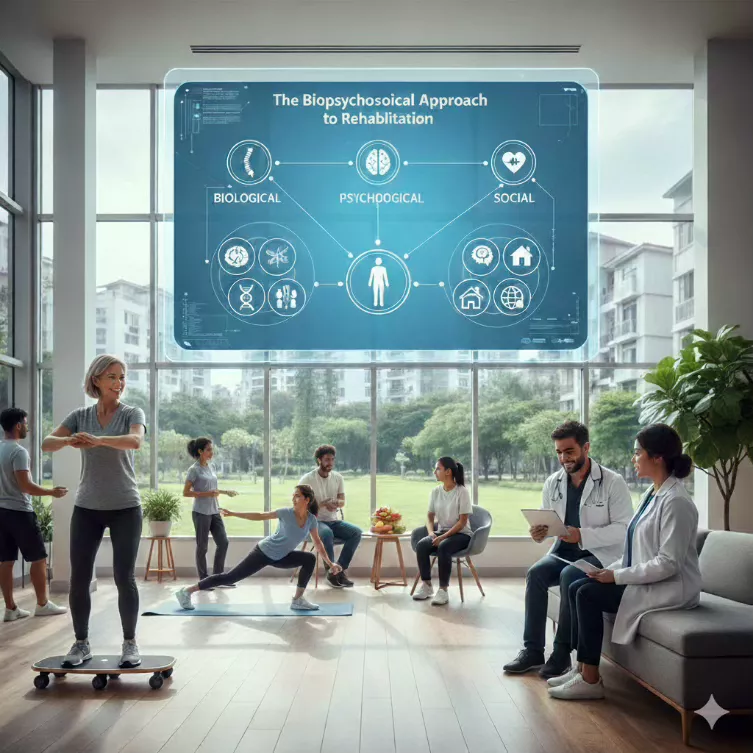
The biopsychosocial model was first proposed to address the limitations of purely biomedical thinking. Instead of viewing pain as a direct result of tissue damage, this model recognises that pain and disability are shaped by three interacting domains:
- Biological factors (the body)
- Psychological factors (the mind and nervous system)
- Social factors (the environment and context)
This framework is now widely accepted in pain medicine, physiotherapy, and rehabilitation sciences¹.
Biological Factors: The Physical Foundations of Pain
Biological factors refer to the physical and physiological contributors to pain and movement limitation, including:
- Tissue health and healing
- Muscle strength, endurance, and control
- Joint mobility and stability
- Nervous system sensitivity
- Inflammation and general health
These factors matter—but they do not operate in isolation. For example:
- Weakness or deconditioning may increase pain sensitivity
- Poor movement patterns can increase tissue stress
- Reduced activity can lead to loss of function and confidence
Modern rehabilitation focuses on restoring capacity and tolerance, not simply identifying damaged structures.
Psychological Factors: The Nervous System and Pain Experience
Psychological factors do not mean pain is imagined or “all in the mind.” They refer to how the nervous system processes and responds to information. Key psychological contributors include:
- Fear of movement or re-injury
- Beliefs about damage or fragility
- Stress, anxiety, and low mood
- Previous pain experiences
- Confidence in recovery
Research shows that fear-avoidance beliefs and catastrophising are among the strongest predictors of poor outcomes in musculoskeletal pain². If movement is perceived as dangerous, the nervous system may:
- Increase muscle tension
- Heighten pain sensitivity
- Limit movement as a protective strategy
Addressing these factors is essential for sustainable recovery.
Social Factors: The Context of Pain and Recovery
Pain does not occur in a vacuum. Social factors strongly influence how pain is experienced and managed, including:
- Work demands and job security
- Family responsibilities
- Social support
- Cultural beliefs about pain
- Access to healthcare and rehabilitation
- Lifestyle and physical activity levels
For example:
- Fear of losing work may increase stress and pain sensitivity
- Lack of support can reduce engagement in rehabilitation
- Sedentary environments can reinforce deconditioning
Effective rehabilitation considers real-world context, not just clinic-based exercises.
Why the Biomedical Model Alone Is Often Insufficient
Traditional biomedical approaches tend to focus on:
- Structural findings on imaging
- Isolated tissue pathology
- Short-term symptom relief
However, large studies have shown that:
- Imaging findings often do not correlate with pain
- Structural changes are common in people without symptoms
- Treating anatomy alone does not reliably predict recovery³
This does not mean biology is unimportant—it means it is only one part of the picture.
How the Biopsychosocial Model Improves Outcomes
Rehabilitation that addresses all three domains has been shown to:
- Reduce pain and disability
- Improve function and quality of life
- Decrease fear of movement
- Improve long-term self-management
- Reduce reliance on passive treatments⁴
This approach aligns with international guidelines for managing chronic musculoskeletal pain⁵.
Education as a Core Component of Rehabilitation Education is not an optional extra—it is a key therapeutic tool. Pain education helps patients understand:
- Why pain persists
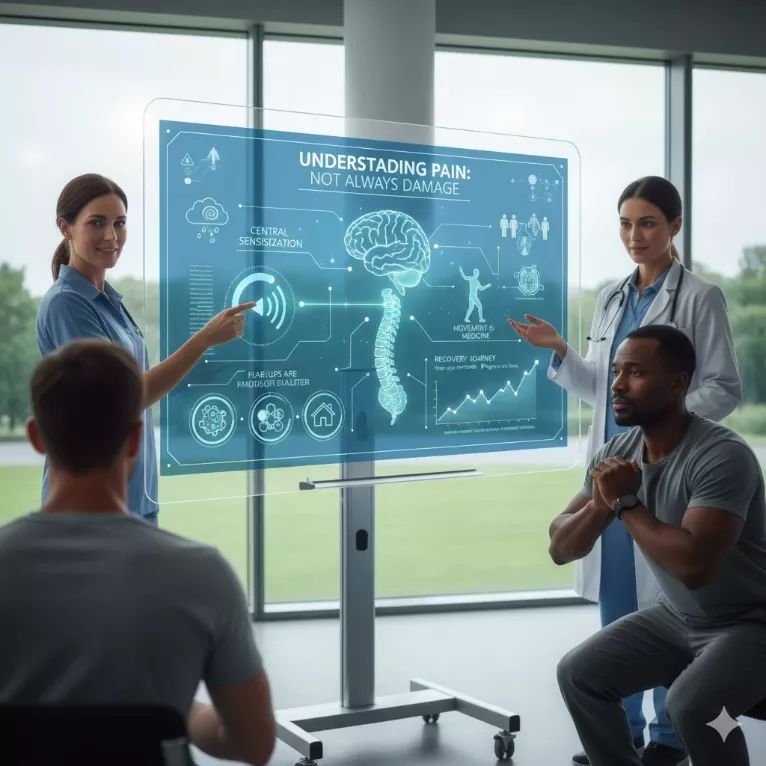
- Why pain does not always equal damage
- Why movement is safe and necessary
- How recovery happens over time
Studies show that combining education with exercise leads to better outcomes than exercise alone⁶. Education reduces fear, builds confidence, and supports engagement in rehabilitation.
Movement and Exercise in a Biopsychosocial Framework
Exercise is not prescribed simply to “strengthen muscles.” In a biopsychosocial model, exercise is used to:
- Retrain the nervous system
- Restore confidence in movement
- Improve physical capacity
- Reduce threat perception
- Support long-term independence
Progression is guided by function, tolerance, and response, not rigid timelines. This is particularly important in people with persistent pain, where graded exposure to movement is essential.
Multidisciplinary Care and the Biopsychosocial Model
Because pain is multifactorial, no single discipline can address all contributing factors. Biopsychosocial rehabilitation often involves collaboration between:
- Physiotherapy
- Biokinetics or exercise therapy
- Medical practitioners
- Nutrition and lifestyle support
- Psychosocial screening where appropriate
This integrated approach allows care to be coordinated, consistent, and patient-centred.
How This Approach Aligns With Documentation-Based Care (DBC)
The biopsychosocial model forms the conceptual foundation of structured rehabilitation programmes such as Documentation-Based Care (DBC). DBC incorporates:
- Objective outcome measurement
- Individualised rehabilitation planning
- Education and reassurance
- Progressive exercise therapy
- Ongoing reassessment and adaptation
By documenting outcomes across physical and psychosocial domains, clinicians can guide care more effectively and transparently.
Who Benefits Most From a Biopsychosocial Approach?
This approach is particularly beneficial for people who:
- Have chronic or recurrent pain
- Have not responded to isolated treatments
- Experience fear of movement
- Have fluctuating or unexplained symptoms
- Want long-term improvement rather than short-term relief
It is not about “treating the mind instead of the body”—it is about treating the whole person.
When a Broader Approach Is Especially Important
- A biopsychosocial approach is especially valuable when:
- Pain persists beyond expected healing time
- Scans do not explain symptoms
- Pain impacts mood, sleep, or work
- Previous treatments have failed
- Surgery is being considered for non-urgent conditions
In these cases, addressing only physical factors is unlikely to succeed.
Final Thoughts
Modern rehabilitation recognises that pain and recovery are complex. The biopsychosocial approach does not deny the importance of tissue health—it places it within a broader, more realistic understanding of human pain and function.
By addressing biological, psychological, and social contributors together, rehabilitation becomes more effective, more compassionate, and more sustainable.
References & Further Reading
- Gatchel RJ et al. The biopsychosocial approach to chronic pain. Psychological Bulletin, 2007.
- Vlaeyen JWS, Linton SJ. Fear-avoidance model of chronic pain. Pain, 2000.
- Brinjikji W et al. Imaging features of spinal degeneration in asymptomatic populations. AJNR, 2015.
- Kamper SJ et al. Multidisciplinary biopsychosocial rehabilitation for chronic low back pain. Cochrane Database, 2015.
- NICE Guidelines. Chronic pain (primary and secondary) in over 16s, 2021.
- Louw A et al. The effect of neuroscience education on pain, disability, anxiety, and stress. Archives of Physical Medicine and Rehabilitation, 2011.